Table Of Content

The benefit of the convergent mixed methods design used in the study by Rosenkranz et al.,26 is that it allowed for a more comprehensive and nuanced understanding of what motivates and demotivates medical students to do research by drawing on both types of data. The survey results showed that students who had experienced exposure to the uncertainties of clinical practice through clerkships and supported compulsory research activities, were more likely to view future research activities positively. The semi-structured interviews revealed that these activities were particularly important because they helped the students to see research as a social activity which has clinical relevance and builds confidence.
Ecological validity
That is, if the baseline survey data are analyzed, and then the participants sampled based on findings from the analysis, then the design is explanatory sequential. In contrast, the design is convergent if the data collection and analyses occur at the same time for the baseline survey and interviews of all or a subsample of the participants of the survey. A key defining factor in sequential or convergent is how the analysis occurs, either through building or merging, respectively.
Study 1
However, the relationship is relatively modest, indicating that the quantitative and qualitative aspects of social relationships are distinct. This result suggests the importance of studying both dimensions of social relationships in the aging process. First, studies differ with respect to the experimental challenges imposed by the phenomena under study. Features of the target behaviors, participants, measurement, and so forth can make threats to internal validity more or less likely.
Extraneous variables (EV)
We also recommend that researchers understand the process approach to design from Maxwell and Loomis (2003), and realize that research design is a process and it needs, oftentimes, to be flexible and interactive. We agree with Greene (2015) that mixed methods research can be integrated at the levels of method, methodology, and paradigm. Therefore, equal-status mixed methods research (that we often advocate) is also called “interactive mixed methods research”. The multi-phase, explanatory sequential mixed methods design used in this study enabled the researchers to provide a more holistic, comprehensive, and actionable evaluation of the PWTF intervention program. The findings from the study can help program developers and policymakers to identify the most effective strategies for addressing the target health issues and design programs that are sustainable and cost-effective. Many of our design dimensions ultimately refer to different ways in which the qualitative and quantitative research components are interdependent.
Safety of concurrent treatment of cats with fluralaner and emodepsid–praziquantel - Parasites & Vectors - Parasites & Vectors
Safety of concurrent treatment of cats with fluralaner and emodepsid–praziquantel - Parasites & Vectors.
Posted: Mon, 06 Jun 2016 07:00:00 GMT [source]
Associated Data
Concurrent validity of single and groups of walking assessments following acute spinal cord injury Spinal Cord - Nature.com
Concurrent validity of single and groups of walking assessments following acute spinal cord injury Spinal Cord.
Posted: Tue, 15 Nov 2016 08:00:00 GMT [source]
His current research includes a longitudinal population-based investigation of the psychological and physiological mechanisms underlying the association between loneliness and health. Louise C. Hawkley, Ph.D., is a senior research scientist in the Institute for Mind and Biology at the University of Chicago. Her current research investigates the psychological and physiological mechanisms that contribute to the association between loneliness and health in an aging population-based sample. The response rate among eligible persons was 45%, comparable with those for other well-conducted telephone surveys.3 Considering that participation in CHASRS involved spending an entire day at the university, this response rate is remarkable. In fact, our desire for social connections seems so strong that some authors have suggested that humans have a basic need to belong (Baumeister and Leary 1995).
Share this article
The fit of integration describes the extent the qualitative and quantitative findings cohere. Understanding these principles and practices of integration can help health services researchers leverage the strengths of mixed methods. Further, for the across-tier comparison to detect the influence of a coincidental event, that event must not only contact multiple tiers, it must cause similar changes in the dependent measure across multiple tiers. It is possible that a coincidental event may be present for all tiers but have different effects on different tiers. As Kazdin and Kopel (1975) pointed out, multiple baseline designs require that the effects of the independent variable must have tier-specific effects, yet the across-tier analysis requires that extraneous variables must not have tier-specific effects.

About the Program
The theoretical drive creates dependencies, because the supplemental component y is performed and interpreted within the context and the theoretical drive of core component x. As a general rule in designing mixed methods research, one should examine and plan carefully the ways in which and the extent to which the various components depend on each other. The area around the center of the [qualitative-quantitative] continuum, equal status, is the home for the person that self-identifies as a mixed methods researcher. This researcher takes as his or her starting point the logic and philosophy of mixed methods research.
What is a mixed methods design?
The degree of concurrent validity in a study can be improved by implementing a number of best practices. Concurrent validity refers to the degree to which scores on one measure (e.g., a test) are similar to scores on another measure (e.g., an observation). It is usually measured by looking at correlations between scores on different measures taken at the same time. For example, researchers can measure whether students’ scores on an IQ test are positively correlated with their grades in school.
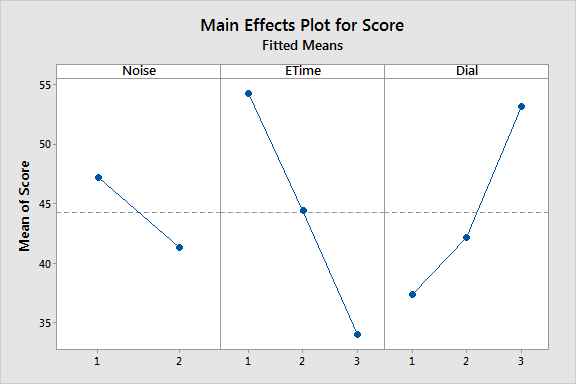
We expect the participants to learn better in “no noise” because of order effects, such as practice. MDes students are expected to complete , a professional development requirement for the program. Requires students to engage in an experience outside of an MDes course or studio where they apply what they have learned in a broader context.
If there is a significant correlation between the two measures, then this suggests that the new questionnaire has concurrent validity. In addition, researchers can assess concurrent validity by examining whether respondents’ responses on different items within the same scale are consistent with one another. There are many different types of repeated measures designs and it’s beyond the scope of this post to cover all of them.
For example, in a study of language skills in typically developing 3-year-old children, maturation would be a particular concern. It would be an even greater concern if the treatment were an instructional program that requires several weeks or months to implement. Testing and session exposure may be particularly troublesome in a study that requires taking the participant to an unusual location and exposing them to unusual assessment situations in order to obtain baseline data. A study may be at heightened risk of coincidental events if the target behavior is particularly sensitive to events in the environment that are uncontrolled by the experimenter. Any of these types of circumstances may require additional tiers in order to clearly address threats to internal validity. Potential setting-level events include staffing changes in classroom, redecoration or renovation of the physical environment, and changes in the composition of the peer group in a classroom, group home, or worksite.
These events would contact all tiers of a MB that take place in that single setting, but not tiers in other settings. In concurrent multiple baseline across participants, behaviors, or stimulus materials that take place in a single setting, this kind of event would contact all the tiers of the multiple baseline. In this case, the effects of this kind of event could be revealed through the across-tier comparison of participants or behaviors that have not been exposed to the independent variable. However, in a concurrent multiple baseline across settings a setting-level event would contact only a single tier—the design would be inherently insensitive to these coincidental events. Finally, practitioners whose work may be influenced by SCD research must understand these issues so they can give appropriate weight to research findings. A broad and general impression such as “these designs are relatively strong” is not sufficient to guide experimental design decisions or to evaluate particular variations of multiple baseline designs.
In this regard, Mathison (1988) recommends determining whether deviating results shown by the data can be explained by knowledge about the research and/or knowledge of the social world. Differences between results from different data sources could also be the result of properties of the methods involved, rather than reflect differences in reality (Yanchar and Williams 2006). In general, the conclusions of the individual components can be subjected to an inference quality audit (Teddlie and Tashakkori 2009), in which the researcher investigates the strength of each of the divergent conclusions.
By including the subject block in the analysis, you can control for factors that cause variability between subjects. The result is that only the variability within subjects is included in the error term, which usually results in a smaller error term and a more powerful analysis. Integration through building occurs when results from one data collection procedure informs the data collection approach of the other procedure, the latter building on the former. Items for inclusion in a survey are built upon previously collected qualitative data that generate hypotheses or identify constructs or language used by research participants.
Data for Study 2 were collected in the first year of the Chicago Health, Aging, and Social Relations Study (CHASRS), a longitudinal, population-based study of persons born between 1935 and 1952. The study aims to examine the social, psychological, and biological aspects of social isolation and health. The response categories were coded 1 (hardly ever), 2 (some of the time), and 3 (often). As in the R-UCLA, each person's responses to the questions are summed, with higher scores indicating greater loneliness. In addition to the lengthy core questionnaire, each wave of the HRS includes sets of questions, or modules, asked of only a portion of the sample. Modules contain questions being developed for future rounds, questions that apply to only a portion of the sample, or questions of interest for a specific research issue.
If, in the initial tier, a pattern of stable baseline data is followed by a distinct change soon after the phase change, this constitutes a potential treatment effect. However, it does not rule out maturation as an alternative explanation of the change in behavior. Further, if the potential treatment effect is more gradual (as one might expect from an educational intervention on a complex skill), maturational changes may be impossible to distinguish from treatment effects. The replicated within-tier analysis looks to patterns of results within the other tiers. If the pattern of change shortly after implementation of the treatment is replicated in the other tiers after differing lengths of time in baseline (i.e., different amounts of maturation), maturation becomes increasingly implausible as an alternative explanation. For example, it is implausible that the effects of maturation would coincide with a phase change after 5 days in one tier, after 10 days in a second tier, and after 15 days in a third.




No comments:
Post a Comment